Food, Politics, and the Fight for Freedom
by Abhya Sharma
5 min read • January 02, 2026
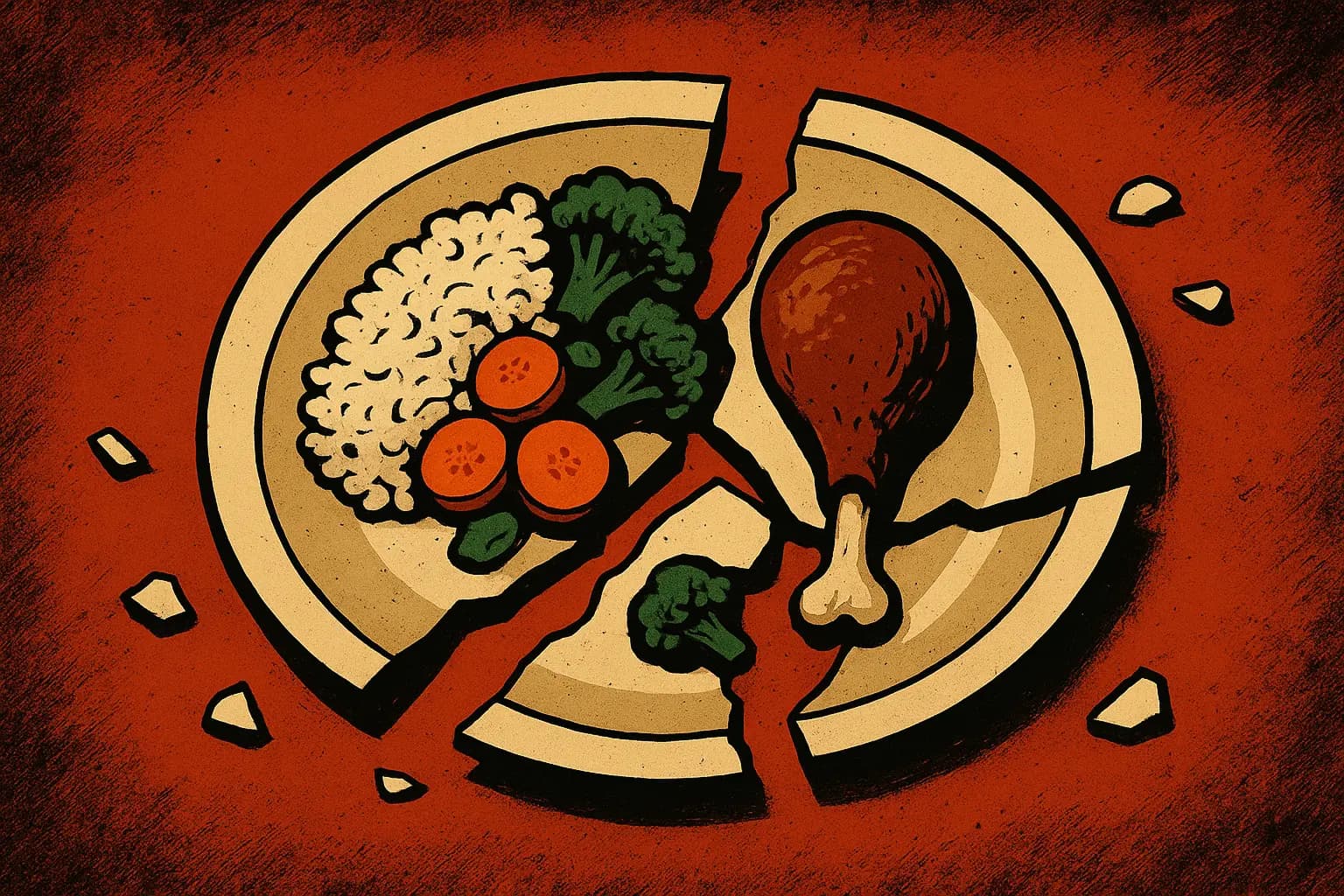
When American psychologist Abraham Maslow studied what motivates human beings, he placed food, sex, and shelter at the very base of his famous hierarchy of needs. These are the essentials without which life cannot be sustained.1 Among them, food is perhaps the most fundamental.
But food has never been only about sustenance. It carries within it the power to influence politics, shape economies, and unite communities. In India, where nearly half of the population is directly or indirectly dependent on agriculture,2 food has always been tied to questions of freedom, dignity, and survival.
Food as a Symbol of Freedom
History is full of moments where food became more than just a necessity — it became a spark for revolution.
- The Sepoy Mutiny of 1857 was triggered by cartridges greased with cow and pig fat. For Hindu and Muslim soldiers alike, this was an assault on their faith. What began as a dispute over food substances soon ignited the first war of independence.3
- The Salt March of 1930 turned a humble mineral into a weapon of protest. By marching to the coastal village of Dandi, where Mahatma Gandhi broke the infamous salt law by making his own salt, he caused a domino effect of civil disobedience all over the country.4
- The Tebhaga Movement in the 1940s was led by Bengal’s sharecroppers, who were forced to give up half their harvest to landlords, leaving them with barely any food or money. The famine of 1943 exacerbated the plight of the sharecroppers. Along with the The Communist Party of India (CPI), demanding "Adhi noy, Tebhaga chai" (Not half, we want two-thirds), peasants organized around their right to food and livelihood. While reforms came slowly, the movement paved the way for abolishing the zamindari system.5
- In 1946, in the town of Anand, Gujarat, farmers fighting exploitative trade cartels formed a cooperative with Sardar Vallabhbhai Patel’s support. That cooperative grew into Amul, sparking the White Revolution and making India the world’s largest milk producer. The success of the venture also prompted the then Prime Minister, Lal Bahadur Shastri, to formulate the National Dairy Development Policy and then the National Dairy Development Board in 1965. What began as a struggle for fair pay became a model of empowerment, especially for rural women.6
When Politics Reaches the Plate
Not all revolutions announce themselves loudly. Some are quieter, etched into recipes and food practices born from centuries of survival. When social and political structures deny access to fundamental needs such as food and water, survival sparks inventiveness.
Dalit communities, for example, created culinary traditions shaped by exclusion and scarcity:
- Bihar’s Musahar (literally translating to “rat-eaters”) community, denied access to other foods, relied on rats for sustenance.7
- Discarded animal bits from upper castes became the only source of meat for many Dalit families, and so they developed recipes using parts such as stomach, skin, intestines, blood, tongue, feet and ear. Fashi, for instance, is a dish which uses the epiglottis of a bullock or a goat as the hero ingredient.8
- The food was cooked in cow or pig fat instead of ghee or oil, as the latter wasn’t affordable.
- Leftover meat was cut into strips, sun-dried, and stored as chanya — protein-rich wafers that ensured nothing went to waste.9
These recipes are more than food. They are living archives of resilience, telling stories of communities who turned deprivation into creativity and survival into strength. Having been pushed to the margins for centuries, the existence of these recipes is an affirmation of their identities.
The bitter taste of exclusion
When something as fundamental as food is denied to someone simply by virtue of them belonging to a group, such a discrimination is bound to leave a psychological impact that the people carry transgenerationally.
Discrimination and exclusion take a heavy toll on people’s inner world. They often lead to withdrawal from others, a loss of confidence, low self-worth, and deep feelings of despair. Many find themselves caught between anger and retreat—sometimes lashing out in frustration, other times pulling back to avoid more hurt. Over time, this constant push and pull erodes dignity, leaves people feeling helpless and alienated, and creates the painful belief that they are somehow “less than human.”10 Dalit literature is also a testament to the impact of food-related discrimination, with most dalit short stories and autobiographies revolving around the quest-for food, the humiliation associated with it, and the desire for a life where food is bought and not brought from other people's homes.11
In fact, the term Dalit itself means “broken”. The term finds its roots in the term “Dhal”, which means split, and it comes from how we split and crush dicotyledonous pulses into two halves (dhal), which makes it easier to cook with.12 Thus, from food to their identities itself, this sense of brokenness and “being less than” is a forever companion for the Dalit people.
More Than a Meal
Every plate carries a history. Every bite holds stories of farmers, workers, and communities who fought — sometimes loudly, sometimes silently — for the right to eat with dignity.
Food, then, is never just about flavor. It is about freedom. It is about resilience. And it is about the ongoing fight for agency, one meal at a time.
About the Author
Abhya Sharma is an independent researcher and psychotherapist. In her practice, she often notices how politics shapes personal struggles. Her interests lie at the intersection of caste, gender, and religion, viewed through an existential lens. She enjoys thinking, writing, and engaging with ideas that help her make sense of the largely nonsensical world we live in.